Introduction: AI Is No Longer the Future — It’s the Present
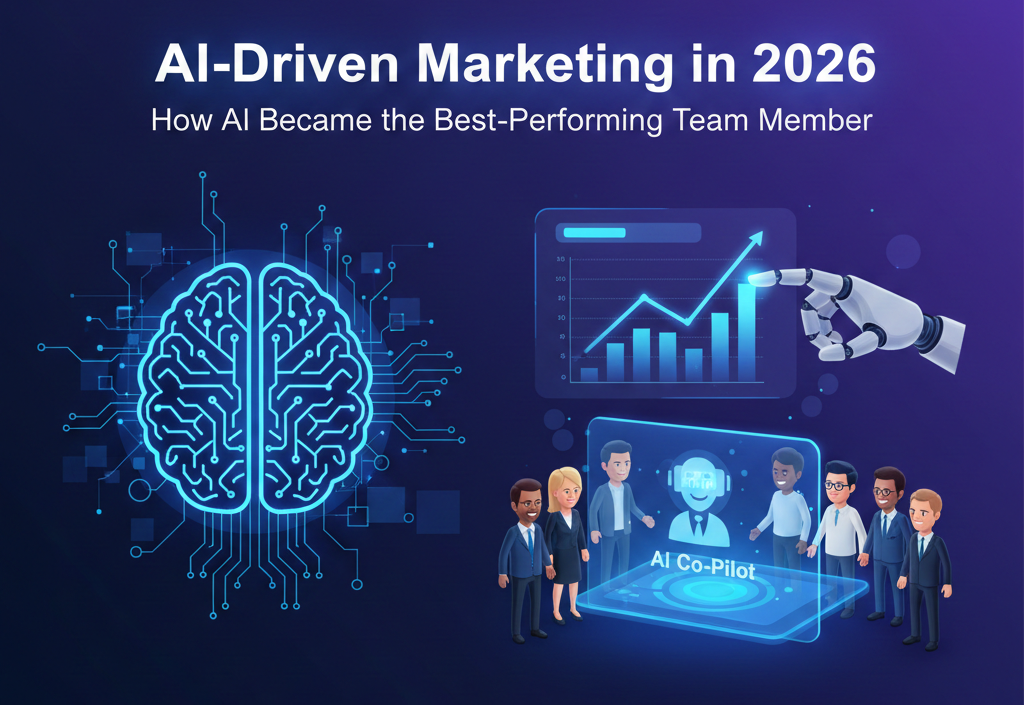
AI is no longer the future — it’s your best-performing team member. From content creation to ad optimization, AI-driven marketing is helping brands scale faster, smarter, and more cost-effectively than ever before.
If you’re still doing everything manually in 2026, you’re already behind.
Artificial Intelligence has moved beyond being a buzzword. Today, it plays a central role in how brands attract, engage, convert, and retain customers. Businesses that adopt AI-powered marketing strategies are seeing better ROI, improved customer experiences, and a significant competitive advantage.
In this blog post, we’ll explore what AI-driven marketing really means, how it works, why it’s dominating digital marketing in 2026, and how you can leverage it to grow your business.
What Is AI-Driven Marketing?
AI-driven marketing refers to the use of artificial intelligence technologies—such as machine learning, natural language processing, and predictive analytics—to automate, optimize, and personalize marketing activities.
Instead of relying on guesswork or manual execution, AI analyzes massive amounts of data in real time to make smarter marketing decisions.
Key Components of AI Marketing
- Machine learning algorithms for performance optimization
- Natural language processing (NLP) for content and chatbots
- Predictive analytics for customer behavior forecasting
- Automation tools for campaigns, emails, and ads
AI doesn’t replace marketers—it enhances human creativity with data-driven intelligence.
Why AI-Driven Marketing Is a High-Engagement Trend in 2026
AI adoption has exploded in recent years, and 2026 marks a turning point where AI is no longer optional.
1. Faster Decision-Making
AI processes data instantly, allowing marketers to react in real time. Campaigns can be adjusted automatically based on performance without waiting days or weeks for analysis.
2. Smarter Targeting
AI identifies patterns in user behavior that humans often miss. This results in highly accurate audience targeting and better conversion rates.
3. Cost Efficiency
Automation reduces manual workload, allowing teams to do more with fewer resources. Small businesses can now compete with enterprise-level brands.
4. Higher Engagement Rates
Personalized content, optimized ad creatives, and intelligent timing lead to increased engagement across platforms.
How AI Is Transforming Digital Marketing
AI in Content Creation
AI-powered tools now assist with:
- Blog writing and content ideation
- Social media captions and scheduling
- Email subject lines and copywriting
- Video scripts and repurposing content
While human creativity remains essential, AI speeds up execution and improves consistency.
AI in Paid Advertising
AI-driven ad platforms automatically:
- Optimize bids and budgets
- Test multiple creatives
- Identify high-performing audiences
- Pause underperforming ads
This leads to better ROI and lower cost per acquisition (CPA).
AI in Email Marketing
AI helps deliver:
- Personalized email content
- Optimal send times
- Automated follow-ups
- Predictive churn prevention
As a result, email marketing becomes more relevant and conversion-focused.
AI in Customer Experience
Chatbots and virtual assistants now provide:
- 24/7 customer support
- Instant responses
- Personalized recommendations
- Seamless omnichannel experiences
This significantly improves customer satisfaction and retention.
Benefits of AI-Powered Marketing for Businesses
Increased Marketing ROI
AI continuously optimizes campaigns based on real performance data, ensuring every marketing dollar is spent wisely.
Scalable Growth
Whether you’re a startup or a global brand, AI allows you to scale marketing operations without proportionally increasing costs.
Data-Driven Personalization
AI enables hyper-personalized messaging based on user behavior, preferences, and intent—leading to higher trust and loyalty.
Competitive Advantage
Brands using AI gain insights faster, adapt quicker, and outperform competitors still relying on traditional methods.
Real-World Use Cases of AI-Driven Marketing
- E-commerce brands using AI for product recommendations and dynamic pricing
- Agencies automating lead generation and qualification
- SaaS companies leveraging AI for onboarding and retention
- Content creators repurposing long-form content into multiple formats
These use cases highlight how AI has become a practical, revenue-generating tool rather than an experimental technology.
How to Implement AI in Your Marketing Strategy
Step 1: Identify Repetitive Tasks
Start by automating repetitive activities like reporting, scheduling, and basic content creation.
Step 2: Choose the Right AI Tools
Select tools aligned with your goals—content, ads, analytics, CRM, or customer support.
Step 3: Combine AI with Human Oversight
AI works best when guided by human strategy, creativity, and ethical judgment.
Step 4: Track, Test, and Optimize
Continuously measure performance and refine your AI-driven workflows.
Common Myths About AI in Digital Marketing
“AI Will Replace Marketers”
Reality: AI replaces tasks, not strategic thinking or creativity.
“AI Is Only for Big Brands”
Reality: Many affordable AI tools are designed specifically for small and medium-sized businesses.
“AI Marketing Is Too Complicated”
Reality: Modern tools are user-friendly and require minimal technical expertise.
SEO Best Practices for AI-Driven Marketing Content
To maximize organic traffic, ensure your AI marketing content follows SEO best practices:
- Use primary keywords like AI-driven marketing, AI-powered marketing, and AI in digital marketing
- Include long-tail keywords such as AI marketing tools in 2026 and benefits of AI marketing
- Optimize meta title and meta description
- Add internal and external links
- Use schema markup for articles
- Include visuals, infographics, and videos
- Ensure mobile responsiveness and fast page speed
The Future of AI-Driven Marketing
AI will continue evolving with advancements in:
- Predictive and prescriptive analytics
- Voice and conversational AI
- Generative video and design
- Emotion-based personalization
Brands that adapt early will dominate visibility, engagement, and revenue in the coming years.
Conclusion: Adapt Now or Fall Behind
AI-driven marketing is no longer optional—it’s essential. In 2026, AI has proven itself as the most reliable, efficient, and scalable marketing partner.
If you’re still managing campaigns manually, you’re limiting your growth potential.
The brands winning today are those that embrace AI, experiment boldly, and combine technology with human creativity.
Now is the time to upgrade your marketing strategy—because AI isn’t replacing marketers, it’s empowering them.